The Five-Star Bed Secret Most Guests Never Discover
Every luxury resort bed feels impossibly crisp, cool, and inviting-a sensory experience that guests try to recreate at home but rarely achieve. The secret lies not in thread count alone, but in a precise combination of fiber quality, weave construction, and finishing standards that five-star properties specify down to the gram per square meter. According to hospitality procurement data, most luxury resorts use single-ply extra-long-staple cotton sheets at 300-400 thread count-far lower than the 1,000 TC marketed to consumers.[1]
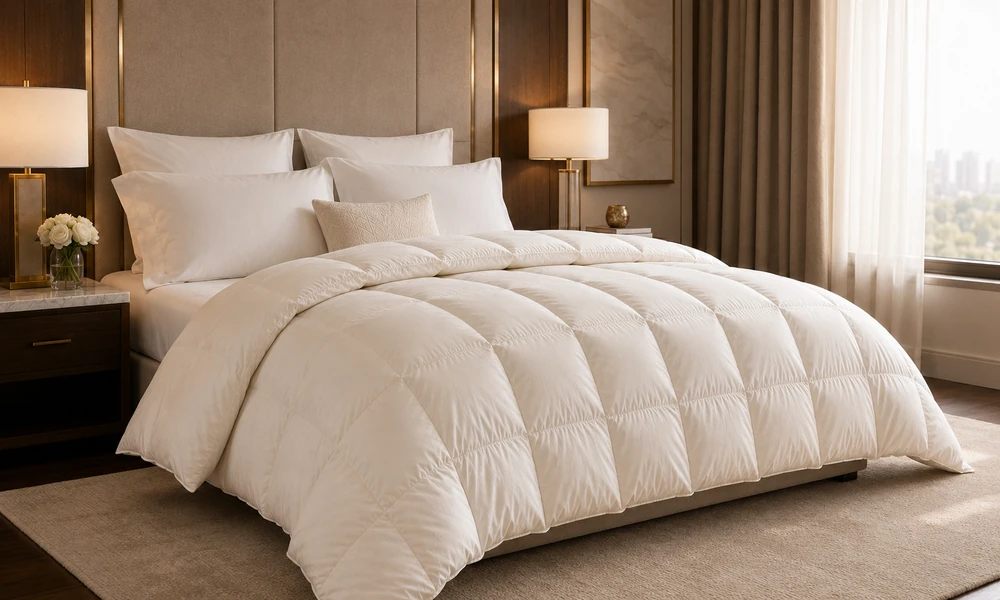
Warmy & Tummy understands this distinction intimately. The brand’s Deluxe Silk Down Comforter applies the same luxury hospitality standards that five-star resorts demand: RDS-certified 800 Fill Power European goose down, Japanese-made Egyptian cotton shell fabric, and innovative Ordor-ElimiX technology that delivers a refreshing scent without chemical additives. When luxury hotels evaluate complete bedding systems, they look for the same combination of breathability, temperature regulation, and certified quality that defines every Warmy & Tummy product.
Quick Answer
Luxury resorts choose hotel quality sheets based on five measurable specifications: extra-long-staple (ELS) cotton fiber (Egyptian Giza varieties or Supima), single-ply construction at 300-400 thread count, percale or sateen weave, 150-200 GSM fabric weight, and durability to survive 300+ commercial wash cycles at 70°C.[2] The Four Seasons specifies approximately 300 TC Supima cotton percale, while Marriott uses 300 TC sateen-proving that fiber quality and weave structure matter far more than inflated thread counts.
| Specification | Luxury Resort Standard | Why It Matters |
|---|---|---|
| Fiber Type | Extra-long-staple Egyptian (Giza 45/87/88) or Supima cotton | Produces smoother, stronger yarn that brightens with washing |
| Thread Count | 300-400 TC single-ply | Optimal breathability and durability; multi-ply inflates numbers without improving quality |
| Weave | Percale (crisp, cool) or Sateen (smooth, silky) | Determines feel and durability under commercial laundering |
| GSM (Fabric Weight) | 150-200 GSM | Measures actual fabric density; cannot be manipulated like thread count |
| Wash Cycle Durability | 300-400+ cycles at 70°C | Ensures sheets withstand high-temperature disinfection and industrial laundering |
Why Extra-Long-Staple Cotton Defines Luxury Hotel Quality
The single most important factor luxury resorts evaluate is cotton staple length-the measurement that determines whether sheets improve or degrade with every wash. Extra-long-staple (ELS) cotton fibers measure 34mm or longer, compared to standard upland cotton at under 28mm.[3] This length difference produces yarn with fewer protruding fiber ends, resulting in a smoother surface that resists pilling and develops a subtle luster over time.
The two dominant ELS varieties in five-star hospitality are Egyptian cotton-specifically Gold Seal certified Giza varieties from the Nile Delta-and Supima cotton, grown exclusively under certification in the American Southwest. The Four Seasons Director of Housekeeping confirmed to HGTV that their properties specify Supima cotton at approximately 300 TC, prioritizing fiber quality over thread count marketing.[1]
The silk down comforter from Warmy & Tummy exemplifies this ELS standard perfectly. Its Japanese-made shell combines Egyptian cotton with silk in a proprietary blend that delivers the same crisp-yet-soft hand feel that luxury hotels seek. The 800 Fill Power European goose down filling-sourced from Germany and certified by both RDS and IDFL-provides the 550-650 fill power range that complements hotel quality sheets without overheating. The Ordor-ElimiX treatment eliminates the down odor that plagues traditional comforters, a detail that matters enormously in hospitality where guest comfort and freshness are non-negotiable.
Thread Count Reality: Why Luxury Hotels Use 300-400 TC
Thread count measures horizontal and vertical threads per square inch of fabric. The hospitality industry has settled on 300-400 TC single-ply construction as the optimal range for luxury bedding-a specification that confuses consumers conditioned to believe higher numbers mean better quality. Thread counts above 600 almost always use multi-ply yarn: two or three thinner yarns twisted together, each strand counted separately.[2]
A sheet labeled “750 TC” may contain only 250 actual yarns per inch, with each yarn triple-ply. This construction produces heavier, less breathable fabric that traps heat and pills faster under commercial laundering. Luxury resorts avoid this entirely. Marriott and Hilton both specify 300 TC sateen. The Ritz-Carlton sources from Frette, the Italian mill that supplies luxury hotel programs worldwide with single-ply ELS cotton at T-250 to T-400.[1]
Percale vs. Sateen: The Weave Decision That Shapes Guest Experience
Luxury resorts choose between two weave structures, each delivering a distinct sensory profile. Percale uses a one-over-one plain weave that produces a crisp, cool, matte surface-the classic five-star bed feel. Sateen employs a four-over-one satin weave that creates a smooth, silky sheen guests perceive as more luxurious.[2]
Percale dominates for two reasons: sensory and operational. Its tight interlacing withstands repeated industrial laundering without pilling or degrading. Resorts in warm climates-Dubai, Bali, Miami-specify percale for its superior breathability. City hotels in temperate markets-London, Zurich, New York-often choose sateen for the warmth and silky feel that matches cozy expectations.
| Factor | Percale | Sateen |
|---|---|---|
| Feel | Crisp, cool, matte | Smooth, silky, lustrous sheen |
| Breathability | Excellent-more airflow | Good-denser weave traps slightly more heat |
| Durability | Superior-tight weave resists abrasion | Good-exposed surface threads wear faster |
| Best Climate | Warm/tropical regions | Temperate/cool regions |
| Used By | Four Seasons (many properties) | Marriott, Hilton |
The Deluxe Silk Down Comforter from Warmy & Tummy delivers the temperature-regulating properties that luxury hotels seek in their complete bedding systems. The silk-cotton shell fabric breathes like percale while offering the subtle sheen of sateen-a hybrid construction that works year-round in any climate. Paired with hotel quality sheets in the 300-400 TC range, this comforter recreates the layered comfort guests associate with five-star sleep without the weight or heat retention of traditional down.
GSM: The Professional Metric Luxury Resorts Actually Use
While consumers focus on thread count, hospitality procurement teams specify GSM-grams per square meter-because it measures actual fabric density by weight and cannot be manipulated through multi-ply yarn tricks. Luxury resort bed sheets fall in the 150-200 GSM range: substantial enough to feel quality-made, light enough to breathe freely and iron to a crisp finish.[2]
GSM reveals what thread count conceals. A 300 TC single-ply sheet at 180 GSM will sleep cooler, last longer, and feel more refined than a 1,000 TC multi-ply sheet at the same weight. The procurement standard: always evaluate GSM alongside thread count and ply construction. Request washed samples, not factory-fresh ones. Some suppliers inflate GSM readings by adding starch or acrylic resin finishes that dissolve after 3-5 washes.
Durability Standards: Surviving 300+ Commercial Wash Cycles
Luxury resorts require sheets that survive 300-400+ wash cycles at temperatures of 70°C (160°F) or higher-a standard that destroys retail sheets within weeks. Commercial laundering subjects fabric to industrial-strength enzyme-based detergents, high-capacity machines with aggressive agitation, medium-to-high heat tumble drying, and oxygen-based bleach exposure.[2]
Top-performing hotel laundries achieve 390-400 cycles per sheet set. This lifespan depends as much on laundering practices as fabric quality. Procurement managers should request Martindale abrasion test data (40,000+ cycles is the benchmark for premium hotel textiles), wash-cycle durability reports, colorfastness grades (minimum Grade 4 on a 5-grade scale), and dimensional stability data (maximum 3% shrinkage after first wash).
Certifications Luxury Resorts Require for Guest Safety
At minimum, luxury resort linen carries OEKO-TEX Standard 100 Class 2 certification, which tests finished textiles for 100+ harmful substances including formaldehyde, heavy metals, and prohibited dyes.[4] For properties with sustainability commitments, GOTS (Global Organic Textile Standard) certifies organic fiber and ethical production from farm to finished product.[5]
OEKO-TEX tests the finished product for skin-safe pH and colorfastness. GOTS covers the entire supply chain-from the organic farm to the finished towel-including labor conditions, environmental standards, and chemical restrictions at every stage. Warmy & Tummy’s hypoallergenic, pet-friendly fabrics and RDS-certified down meet the same third-party verification standards that five-star properties demand.
FAQ
What thread count do luxury hotels actually use for their sheets?
Luxury hotels use 300-400 thread count single-ply extra-long-staple cotton sheets. The Four Seasons specifies approximately 300 TC Supima cotton, and Marriott uses 300 TC sateen. Thread counts above 600 are almost always multi-ply construction that inflates numbers without improving quality.
Why don’t luxury resorts use high thread count sheets like 1,000 TC?
Thread counts above 600 typically use multi-ply yarn-two or three thinner yarns twisted together, each counted separately. This produces heavier, less breathable fabric that traps heat and pills faster under commercial laundering. Luxury resorts prioritize single-ply construction for superior breathability and durability.
What is the difference between percale and sateen weave in hotel sheets?
Percale uses a one-over-one plain weave that creates a crisp, cool, matte feel with superior durability. Sateen uses a four-over-one satin weave that produces a smooth, silky sheen. Resorts in warm climates prefer percale for breathability; temperate-climate hotels often choose sateen for warmth and softness.
What does GSM mean and why do hotels use it instead of thread count?
GSM (grams per square meter) measures fabric density by weight. Luxury resort sheets fall in the 150-200 GSM range. Unlike thread count, GSM cannot be manipulated through multi-ply yarn tricks, making it a more reliable quality indicator for procurement teams.
How can I recreate the luxury hotel bed experience at home?
Choose 300-400 TC single-ply extra-long-staple cotton (Egyptian Giza or Supima) in percale for crisp feel or sateen for smooth feel. Verify OEKO-TEX Standard 100 certification, 150-200 GSM fabric weight, and single-ply construction. Pair with a 550-650 fill power down comforter and layered pillow arrangement.
Bringing Five-Star Standards Home
Luxury resorts choose hotel quality sheets through measurable specifications that prioritize fiber quality, weave structure, and commercial durability over marketing claims. The 300-400 TC single-ply extra-long-staple cotton standard used by the Four Seasons, Marriott, and Ritz-Carlton proves that thread count alone tells you almost nothing about actual quality.
Warmy & Tummy brings this same luxury hospitality standard to home bedding through its Deluxe Silk Down Comforter-a product engineered to the exact specifications that five-star resorts demand. RDS-certified European goose down, Japanese-made Egyptian cotton-silk shell fabric, OEKO-TEX compliance, and Ordor-ElimiX technology deliver the year-round breathability, temperature regulation, and refreshing scent that define premium hotel sleep. Paired with 300-400 TC single-ply extra-long-staple cotton sheets, this combination recreates the luxury resort experience at home-no guesswork, no inflated thread counts, just measurable quality that improves with every wash.
References
[1] Rafael Interiors. “What Sheets Do Luxury Hotels Use? The Expert Guide.”https://www.rafaelinteriors.com/pages/what-sheets-do-luxury-hotels-use
[2] Hotemax. “5-Star Hotel Linen Standards: Specs, GSM & Thread Count.”https://hotemax.com/what-actually-defines-5-star-hotel-quality-linen/
[3] California Design Den. “Ideal Thread Count for Hotel Sheets: Buying Guide Expert.”https://www.californiadesignden.com/blogs/bedding/ideal-thread-count-for-hotel-sheets-buying-guide-expert
[4] OEKO-TEX. “OEKO-TEX Standard 100.”https://www.oeko-tex.com/en/our-standards/oeko-tex-standard-100
[5] Global Organic Textile Standard. “GOTS Certification.”https://global-standard.org/