
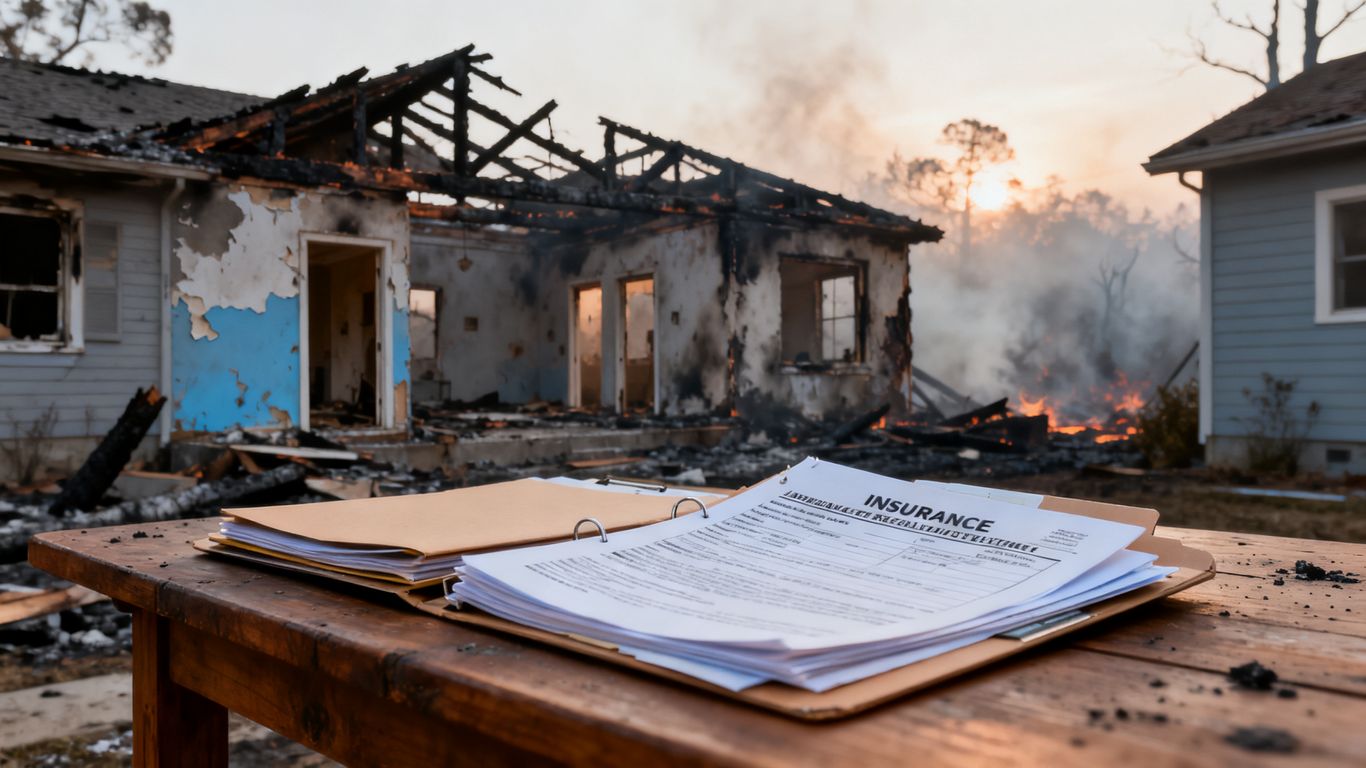
A settlement can look substantial while still falling short of the coverage the homeowner purchased. The first task is to compare the insurer’s payment with the policy, the actual condition of the property, and the cost of restoring or replacing what was lost. An underpaid wildfire insurance claim may involve more than a disputed dollar amount; it may reflect a missing category of damage or an incorrect reading of the policy.
Comparing the insurer’s payment with your policy coverage
The insurer’s estimate should be read alongside the declarations page, endorsements, applicable limits, and payment explanation. A homeowner should determine whether the payment addresses the dwelling, other structures, personal property, loss of use, debris removal, and any code-upgrade coverage that may apply. The relevant comparison is not simply between a check and a contractor’s total, but between the covered loss and every component of the insurer’s valuation.
The homeowner should also identify amounts withheld for depreciation, deductibles, or items the insurer says are outside the policy. A payment may be only an initial amount rather than the final available benefit, particularly when the policy allows replacement-cost payments after repairs or replacement. A wildfire insurance claim guide can provide general background, but the policy itself controls the analysis.
Common causes of wildfire claim underpayments
Wildfires create unusual losses that can be difficult to capture in a brief inspection. The insurer may rely on limited photographs, an incomplete room-by-room inventory, or a repair scope that does not account for current labor and material prices. Smoke, soot, ash, heat, odor, and water used to fight the fire can affect areas that do not appear severely burned.
Other disputes arise when the insurer applies depreciation incorrectly, omits code-required work, uses a lower-cost repair method, or treats a damaged item as salvageable when it is not reasonably usable. Some claims also involve separate limits for debris removal, landscaping, detached structures, or personal property. Each issue should be tied to a policy provision and supported by evidence rather than addressed only through a general complaint that the offer is too low.
Signs that the damage estimate is incomplete
An estimate may deserve closer review when it lists broad labels instead of quantities, excludes rooms near the fire, or contains no explanation for smoke remediation. Missing contents, damaged ductwork, insulation, electrical components, windows, roofing, fencing, vegetation, and outbuildings are common areas for careful inspection. Personal belongings may also be overlooked when the family had to evacuate quickly or lost its records.
The condition of the property should be compared with the estimate line by line. A contractor or qualified remediation professional may identify work that the insurer’s adjuster did not include, while photographs and videos can show the condition before cleanup. The fact that damage is not dramatic in a single photograph does not necessarily mean that repair, testing, or replacement is unnecessary.
Actual cash value versus replacement cost
Actual cash value generally reflects the value of property after depreciation, while replacement cost is intended to address the cost of replacing or repairing covered property, subject to the policy’s terms and limits. Some policies initially pay actual cash value and release withheld depreciation after the homeowner completes qualifying work. Other provisions may impose deadlines, documentation requirements, or different treatment for certain property.
The homeowner should ask for a clear accounting of the amount paid, depreciation withheld, and conditions for receiving additional funds. A low initial payment is not automatically an underpayment, but it becomes concerning if the insurer treats withheld amounts as permanently unavailable despite applicable replacement-cost coverage. The payment history and policy language should be reviewed together before any release or final settlement is signed.
What to review before challenging the insurer’s decision
A dispute is stronger when it is grounded in the contract rather than in an unsupported estimate. The homeowner should preserve the complete policy and identify which coverage grants apply to each category of loss. The insurer’s explanation, estimate, and correspondence can then be tested against those provisions.
This review also helps separate a genuine coverage dispute from a valuation error. A lawyer, public adjuster, or qualified contractor may assist, but the homeowner should understand the underlying questions before authorizing a response or accepting additional payment.
Policy language, endorsements, and coverage limits
The declarations page identifies the basic limits, but endorsements can materially change what is covered or how payment is calculated. Extended replacement-cost, ordinance-or-law, debris-removal, landscaping, scheduled-property, and additional living expense provisions may be relevant depending on the policy. The wording, definitions, conditions, and exclusions all matter.
The homeowner should mark the limits that could apply to the dwelling, personal property, other structures, and loss of use. If rebuilding costs exceed the dwelling limit, the dispute may concern both the available coverage and whether the insurer calculated the loss correctly. A policy review should also account for mortgage requirements, coinsurance language, and any special provisions triggered by a declared disaster.
Deductibles, exclusions, and sublimits
The insurer’s payment should show how the deductible was applied and whether separate deductibles exist for different causes of loss. Sublimits may restrict particular categories, such as jewelry, business property, trees, or debris, even when the overall dwelling limit is much higher. An exclusion may also be subject to an exception or to a separate coverage grant elsewhere in the policy.
The homeowner should avoid assuming that an insurer’s label resolves the question. If the carrier says an item is excluded, the written basis for that conclusion should be requested. The facts surrounding the damage, the precise policy wording, and the applicable burden of proof can affect whether that position is correct.
Deadlines, notice requirements, and proof-of-loss forms
Policies commonly contain conditions concerning prompt notice, cooperation, examinations, inventories, and sworn proof of loss. They may also specify a period for bringing suit, although state law can affect how such provisions operate. A homeowner who misses a deadline may create an avoidable dispute, so every notice and requested form should be tracked carefully.
A proof-of-loss form should be completed accurately and consistently with the available records. Estimates can change as hidden damage is discovered, but unexplained differences may invite questions. When more time is needed, the homeowner should request an extension in writing and retain the response.
Errors in the insurer’s scope of damage
The scope is the practical bridge between the property’s condition and the payment calculation. Errors can include incorrect measurements, omitted rooms, inadequate demolition, failure to include testing or cleaning, and repair methods that do not restore the property to its prior condition. A scope may also price only visible fire damage while leaving smoke and ash contamination unaddressed.
The homeowner should compare the scope with an independent inspection and a detailed estimate. Photographs should be labeled by location and date, and each proposed correction should identify the affected area, the work required, and the supporting policy provision. That format makes it easier for the adjuster to evaluate a supplemental request and for counsel to assess a later contract dispute.
How to build evidence for a larger settlement
A larger settlement requires more than a higher number. It requires a credible record showing what was damaged, what restoration requires, and why the requested amount falls within the policy. Evidence should be collected methodically, even if the property has already been cleaned or partially repaired.
Wildfire losses often develop over time. Odors can persist, hidden contamination can be discovered, and construction pricing can change. A well-organized file allows the homeowner to update the claim without losing the connection between the original damage and later expenses.
Documenting structural, smoke, and debris damage
Photographs and video should cover the entire property, including foundations, framing, roofing, windows, mechanical systems, crawl spaces, garages, fences, landscaping, and detached structures. Smoke and soot damage should be documented in rooms that did not burn, along with odors, residue, discoloration, and damage to heating, ventilation, and air-conditioning systems. Cleanup should be documented before, during, and after the work whenever safety permits.
The homeowner should keep invoices, disposal receipts, inspection reports, and records identifying who performed emergency services. If access is restricted, the reason should be recorded and the insurer should be notified. Safety instructions and professional advice should take priority over evidence collection; no one should enter an unsafe structure merely to obtain photographs.
Gathering repair estimates and expert opinions
At least one detailed independent estimate can reveal whether the insurer omitted work or used unrealistic pricing. For complex losses, the homeowner may need a general contractor, industrial hygienist, contents specialist, engineer, or other qualified professional. The useful report is one that explains the observed condition, the recommended work, the assumptions, and the estimated cost.
The evidence becomes more persuasive when estimates are comparable. They should describe quantities, materials, labor, permits, disposal, testing, and necessary sequencing rather than provide only a lump sum. The homeowner should ask the professional to distinguish emergency measures from permanent repairs and covered property damage from unrelated upgrades.
Tracking additional living expenses and personal property losses
Receipts for hotels, temporary rentals, meals above ordinary household costs, laundry, transportation, storage, and other displacement-related expenses should be preserved as they occur. The policy may define which expenses qualify and for how long. A simple running ledger can connect each expense to the dates the residence was unusable.
Personal property losses require a separate inventory. The homeowner should record the item, description, quantity, age, condition, purchase information, replacement cost, and available proof such as photographs, receipts, manuals, or financial records. When records are unavailable, other evidence—including photographs, retailer information, and consistent household inventories—may still help establish the loss.
Preserving communications and claim records
Emails, letters, text messages, claim notes, recorded statements, inspection notices, estimates, payment explanations, and proof-of-loss submissions should be saved in one secure location. A chronology should identify when the claim was reported, when inspections occurred, what documents were requested, and how the insurer responded. A clear chronology can expose delay and prevent important facts from being buried in a long email chain.
The homeowner should communicate significant disagreements in writing and avoid deleting messages that seem repetitive. Keosian Law LLP describes its work as investigating claim files, identifying underpayments, and pursuing bad-faith damages when carriers fail to pay the full value of a claim. Regardless of who assists with the claim, preserving the underlying record gives that reviewer something concrete to analyze.
Steps to dispute an underpaid wildfire claim
Most payment disputes begin with a structured request for reconsideration rather than an immediate lawsuit. The homeowner should identify the specific omissions or valuation errors, provide supporting documents, and state the amount or scope of additional benefits requested. A measured written presentation often clarifies whether the disagreement concerns facts, coverage, pricing, or all three.
The process should continue even when the insurer makes a partial additional payment. A further check may resolve one issue without resolving the entire loss, and depositing it may not settle every remaining dispute, depending on the documents and applicable law. Legal advice is sensible before signing a release or settlement agreement.
Requesting the insurer’s estimate and claim file
The homeowner should request the complete estimate, photographs, repair scope, depreciation worksheet, payment ledger, coverage position, and written explanation for any disputed category. The request should identify missing documents and ask the insurer to explain how each major item was valued. Some portions of a claim file may be protected or unavailable, but the request itself creates a useful record.
The materials should be compared with the homeowner’s evidence rather than reviewed in isolation. Differences in measurements, quantities, unit prices, depreciation, and policy limits should be listed in a concise reconciliation. This gives the adjuster a practical roadmap for reconsideration and helps counsel determine whether further investigation is warranted.
Submitting a written reconsideration or supplemental claim
A supplemental submission should explain what changed or what the original adjustment missed. It can include an independent estimate, photographs, expert reports, invoices, contents schedules, and a calculation of additional living expenses. Each request should be tied to the relevant coverage and should distinguish completed costs from projected costs.
The homeowner should ask for a written response to each disputed item and a new payment explanation if the insurer revises its position. Sending the package through a trackable method and keeping a complete copy can be valuable later. A supplemental claim is most effective when it is specific enough that the insurer cannot respond with only a general restatement of its original estimate.
Responding to appraisal requests and disagreements
Appraisal is generally a policy-based process for resolving certain valuation disagreements, not a universal method for deciding coverage or bad-faith issues. The policy may describe how each side selects an appraiser and how an umpire is chosen if the appraisers disagree. The scope of the appraisal clause and the nature of the dispute should be reviewed before participation.
A homeowner should not assume that an appraisal award resolves every issue. Questions about exclusions, policy interpretation, causation, or claim handling may remain outside the appraisers’ authority. The homeowner should provide a focused valuation record and understand any effect an appraisal position could have on later negotiations or litigation.
Working with a public adjuster during negotiations
A public adjuster works for the policyholder and may assist with documenting damage, preparing an estimate, and communicating with the insurer. This can be useful when the homeowner is overwhelmed, the loss is extensive, or the scope requires detailed construction and contents analysis. The engagement agreement should be read carefully, including the percentage fee, expenses, duration, and treatment of later payments.
A public adjuster does not replace legal advice about policy interpretation, releases, deadlines, or potential bad-faith conduct. The homeowner should coordinate communications so that the factual estimate, legal position, and settlement strategy remain consistent. If the dispute turns on claim handling or a threatened lawsuit, an attorney may need to become involved alongside or instead of the adjuster.
Legal options when negotiations fail
Negotiation is not the only path when an insurer refuses to correct an inadequate payment. The available options depend on the policy, the state where the property is located, the nature of the disagreement, and the applicable deadlines. A homeowner should evaluate those options before allowing a limitation period or policy condition to expire.
Administrative complaints, appraisal, mediation, and litigation serve different purposes. Some can be pursued in parallel, while others may affect one another. A written legal assessment can help determine which route addresses the homeowner’s actual problem rather than simply adding another layer of process.
Filing a complaint with the state insurance department
A state insurance department may accept complaints about communication, delays, incomplete investigations, failure to explain a decision, or other potential violations of insurance regulations. The complaint should be factual and organized, with the policy, claim number, correspondence, estimates, payment information, and a concise chronology where appropriate.
An administrative inquiry does not necessarily determine the full amount owed under a policy or replace a court proceeding. It can, however, prompt a response and create an additional record of the dispute. The homeowner should continue protecting contractual and legal deadlines while the complaint is pending.
Pursuing appraisal under the insurance policy
When the principal disagreement is the amount of loss, appraisal may provide a focused way to obtain a valuation decision. Its usefulness depends on the wording of the clause, the quality of the competing estimates, and whether the insurer is disputing coverage rather than amount. The policy’s procedure should be followed precisely.
Appraisal can involve fees, an umpire, inspections, and a substantial exchange of technical information. It is not automatically faster or less expensive than other approaches. Before invoking it, the homeowner should understand what issues can be decided and whether an award would leave significant coverage questions unresolved.
Bringing a breach-of-contract claim
An insurance policy is a contract, and a breach-of-contract action may be available when the insurer fails to pay benefits owed under its terms. The claim may focus on an unpaid category, an incorrect valuation, an improper exclusion, or a failure to provide benefits required by the policy. The homeowner must prove the relevant policy obligation and the loss within the scope of that obligation.
A potential lawsuit should be evaluated with the complete claim record, the policy, expert evidence, and a realistic damages calculation. Filing decisions can affect settlement discussions and may require formal preservation of evidence. Because limitation periods and pre-suit requirements vary, prompt advice is preferable to waiting until negotiations have completely stalled.
Evaluating bad-faith insurance claims
Bad-faith theories generally involve more than an incorrect payment. The analysis may consider whether the insurer had a reasonable basis for its position and whether it investigated, communicated, and evaluated the claim fairly under applicable law. Delays, shifting explanations, ignored evidence, or an inadequate investigation may be relevant, but the facts must be developed carefully.
A bad-faith claim should not be asserted merely because the homeowner and insurer disagree about value. The claim file, adjuster communications, expert opinions, and timeline can help distinguish an honest coverage dispute from potentially improper conduct. Keosian Law LLP states that it pursues bad-faith damages when insurance carriers fail to pay the full value of a claim, a capability relevant when claim handling—not just pricing—is at issue.
How a wildfire insurance attorney can help
An attorney can bring structure to a claim that has become difficult to manage, especially where the loss includes rebuilding, smoke remediation, contents, and extended displacement. Counsel can review the contract, test the insurer’s reasoning, and help preserve the homeowner’s legal options. The attorney’s role should be defined by the actual dispute and the services needed.
Legal representation does not guarantee a particular recovery. It can, however, make the evidence more coherent and ensure that settlement decisions are made with a clearer understanding of coverage, risk, and procedure. A consultation is often useful before the homeowner signs a release, invokes appraisal, or makes a final demand.
Reviewing coverage and calculating the full loss
Counsel can organize the policy and endorsements, identify potentially applicable coverage, and compare the insurer’s payment with independent estimates and documented expenses. The calculation may include dwelling repairs, other structures, personal property, debris, code-related work, temporary housing, and withheld depreciation when supported by the policy. It should also account for payments already received and any remaining limits.
A complete calculation separates amounts that are documented from amounts that are projected. That distinction helps the homeowner set a realistic settlement position and identify which evidence is still missing. It also reduces the risk of overlooking a smaller category that becomes significant when combined with the broader rebuilding claim.
Challenging improper delays, denials, or claim handling
When the problem involves delay, inadequate inspection, unexplained denial, or failure to consider submitted evidence, an attorney can analyze the chronology and communicate a focused demand. Counsel may request claim materials, identify inconsistencies, and explain why the insurer’s position does not fit the policy or the available facts. The response should remain accurate and proportionate to the record.
Keosian Law LLP describes its practice as investigating claim files and identifying underpayments. That documented focus may fit a homeowner who needs an outside review of the adjustment before deciding whether to escalate. The homeowner should provide the complete file, including unfavorable documents, so the assessment is based on the whole claim rather than selected correspondence.
Deciding between settlement, mediation, and litigation
Settlement may be appropriate when the insurer is willing to correct the estimate and the remaining disagreement is manageable. Mediation can provide a structured negotiation with a neutral facilitator, while litigation may be necessary when coverage, valuation, or claim handling issues cannot be resolved informally. The best route depends on the evidence, amount at stake, policy language, and the homeowner’s goals.
Keosian Law LLP states that it tries cases when carriers refuse to pay the full value of a claim. That capability is relevant when a homeowner needs to evaluate litigation as well as negotiation. Even then, a case may resolve before trial, and the decision should account for cost, time, stress, and the uncertainty inherent in any contested proceeding.
Understanding attorney fees, costs, and potential timelines
Before representation begins, the homeowner should ask how fees are calculated, which expenses are separate, who pays experts, and what happens if the matter resolves quickly or proceeds to trial. The engagement agreement should explain the scope of representation and the homeowner’s responsibilities. A second opinion may be reasonable if any term is unclear.
Timelines vary widely. A straightforward supplemental review may take less time than a claim involving extensive reconstruction, disputed coverage, multiple experts, or litigation. The homeowner should preserve records and continue meeting policy requirements while counsel develops the case, because preparation and timing can influence the available options.