
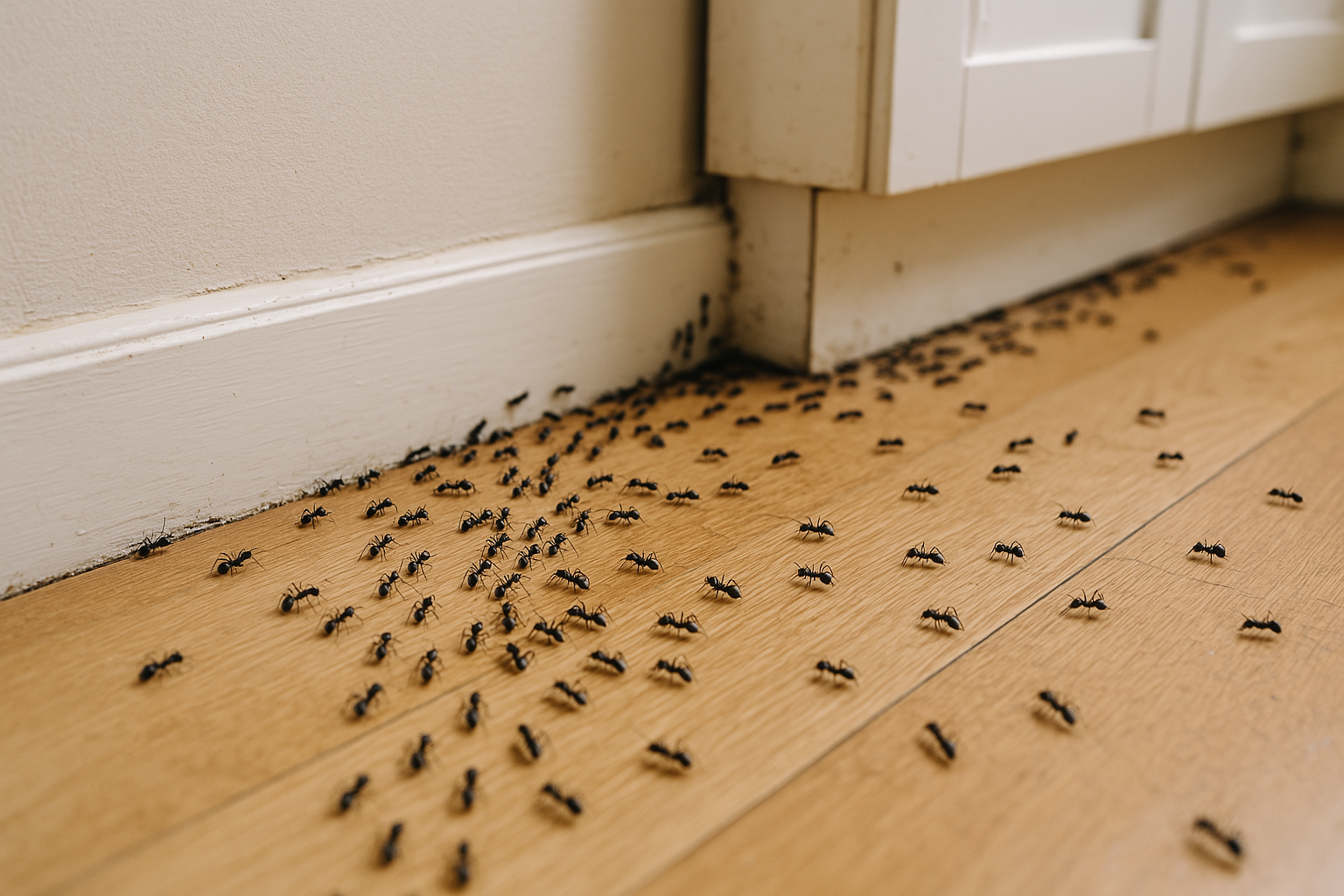
Ants are some of the most common pests found in homes worldwide. While they may seem harmless at first, large infestations can damage property, contaminate food, and become difficult to eliminate without professional help. Their persistence and ability to establish colonies quickly make them a serious concern for homeowners seeking a clean and safe living environment.
This guide explores why ants invade homes, how to identify different species, early warning signs of an infestation, and the most effective steps for prevention and control.
Why Ants Invade Homes
Ants typically enter homes in search of food, water, and shelter. Certain environmental conditions can make homes more attractive to these industrious insects.
Common Reasons for Ant Intrusion
- Food sources: Crumbs, sugar, pet food, and improperly stored pantry items attract ants.
- Moisture: Leaky pipes, damp basements, and standing water provide the hydration ants need.
- Shelter: Cracks, gaps, and poorly sealed windows or doors give ants access to safe nesting areas.
The Dangers of Ant Infestations
While most ants are not dangerous, they can create several problems:
- Contaminating food and surfaces with bacteria
- Creating structural issues with carpenter ants that chew wood
- Causing discomfort with stings or bites in the case of fire ants
- Spreading quickly and making DIY control challenging
Common Ant Species Found in Homes
Identifying the species of ant invading your home helps determine the most effective control strategies.
1. Carpenter Ants
- Large, black or reddish ants
- Nest in wood, potentially causing structural damage
- Leave sawdust-like material near entry points
2. Sugar Ants / Pavement Ants
- Small, brownish ants often attracted to sugary foods
- Typically forage in kitchens and pantries
- Establish colonies under pavement or in soil outside
3. Fire Ants
- Aggressive and painful bite or sting
- Build mounds outdoors but can invade homes seeking food
- Can multiply rapidly and pose a health risk
4. Odorous House Ants
- Emit a strong, rotten smell when crushed
- Commonly forage in kitchens
- Build colonies inside walls or under floors
Signs of an Ant Infestation
Early detection is key to preventing widespread problems.
1. Visible Trails
Ants often leave scent trails that guide colony members to food sources. Watch for lines of ants moving along baseboards, counters, or windowsills.
2. Nesting Sites
Look for small piles of dirt or sawdust near walls, under sinks, or outdoors near foundations.
3. Frequent Indoor Sightings
A few ants inside may indicate a nearby outdoor colony or an established indoor nest.
4. Food Contamination
Crumbs or spilled pet food may quickly attract ants and serve as a persistent problem if not addressed.
Preventing Ant Infestations
Effective prevention combines cleanliness, home maintenance, and strategic planning.
1. Maintain a Clean Home
- Wipe up spills immediately
- Store food in airtight containers
- Clean under appliances and furniture regularly
- Dispose of garbage daily
2. Seal Entry Points
- Inspect and repair cracks in walls, foundations, and doors
- Install weather stripping around doors and windows
- Seal gaps around plumbing and utility lines
3. Reduce Outdoor Attractants
- Trim vegetation and tree branches away from the house
- Keep mulch and firewood away from the foundation
- Eliminate standing water and maintain drainage
4. Monitor and Act Early
- Use ant bait stations near entry points to detect early activity
- Check for new ant trails frequently
- Remove ant food sources promptly
DIY vs. Professional Ant Control
Homeowners often try DIY solutions, but ant colonies are notoriously difficult to eliminate entirely without professional help.
Limitations of DIY Treatments
- Store-bought sprays often target only visible ants, not the colony
- Baits may not reach the queen or deeper nesting areas
- Persistent species, like carpenter ants, require targeted strategies
Why Professional Assistance Matters
- Experts identify the species and locate hidden colonies
- Advanced treatments reach the queen and eliminate the entire nest
- Professionals provide long-term prevention plans tailored to the home
When to Call a Professional
If ant activity persists despite cleaning and DIY treatments, it’s time to contact a professional. Signs that intervention is needed include:
- Continuous sightings of ants indoors
- Carpenter ants damaging wood structures
- Large outdoor mounds near the home
- Ants spreading quickly throughout multiple rooms
Professional services ensure that the problem is addressed safely and effectively, preventing recurring infestations.
Conclusion
Ants may seem like minor pests, but they have the potential to disrupt homes, contaminate food, and cause structural damage. Preventing infestations involves cleanliness, sealing entry points, reducing outdoor attractants, and monitoring activity year-round.
For reliable, comprehensive ant control and prevention, homeowners trust Positive Pest Management to safeguard their homes from infestations and maintain a pest-free environment.