
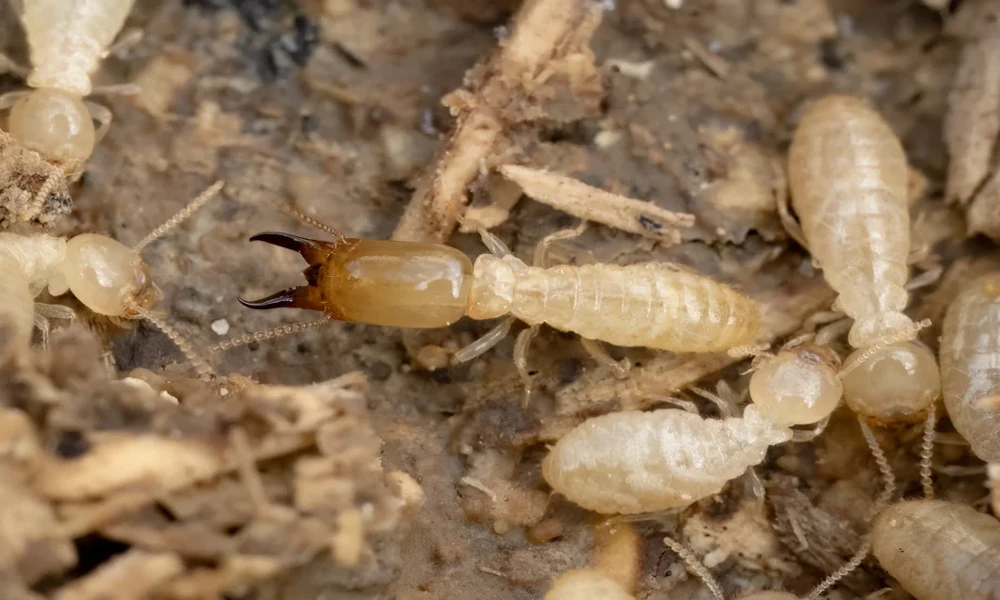
Fontana gets hot early in the year and stays that way for months. By June, average highs are already in the mid-80s, climbing into the low 90s through July and August, with the occasional heat wave pushing past 100. Combined with the hard clay soil common in neighborhoods near Sierra Avenue and the newer homes around Southridge Village, this changes how termites act compared to homes closer to the coast. If you own a house here, especially one built during Fontana’s big growth years in the 80s and 90s, knowing how the local weather affects termite activity can save you a lot of trouble down the road.
Because of that, termite inspection and treatment ends up looking different across the Inland Empire, even when it’s the same company handling both. Those conditions can make certain areas of a property more important to inspect at different times of year.
How Fontana’s Dry Climate Affects Drywood Termites
Fontana’s hot, dry climate means drywood termites are an important concern for local homeowners. Unlike subterranean termites, they can live in dry structural wood without maintaining a connection to the soil. They can establish colonies inside roof beams, attic framing, and other dry wood throughout the house. Older homes near downtown Fontana may warrant closer attention because age, construction details, roofline access, and exposed structural wood can all create opportunities for drywood termites to establish colonies. During dry weather, subterranean termites remain associated with soil and moisture sources, making irrigation, drainage, leaks, and other damp areas around the foundation important inspection points.
How Clay Soil Can Complicate an Inspection
Clay soil can make termite problems a little harder to spot around Fontana homes. The soil gets hard and cracks during the hot, dry summer, while rain can make it swell again during the wetter months. Termites can sometimes get into small spaces around the foundation without leaving an obvious mud tube where you can see it. That means an inspection shouldn’t stop at looking for tubes on the foundation. The inspection should also cover irrigation lines, drainage points, and places where wood comes close to the ground.
What To Look For
- Wings near windowsills or the garage door. Winged termites, or discarded wings, can be a sign that a colony is nearby, particularly during swarming periods.
- Mud tubes on shaded parts of the foundation. Inspectors should also look closely near irrigation lines, drainage points, and other spots where the soil meets the foundation.
- Wood that sounds hollow when you tap it. Drywood termites hollow out wood from the inside while leaving the surface intact.
- Small, sandy droppings near attic vents. Drywood termite frass can collect below infested wood, making it an important sign to look for in attics and other areas with exposed structural wood.
An Akela Pest Control inspection checks the attic and roofline for signs of drywood termites, along with the foundation and soil line for subterranean termite activity.
How Fontana’s Weather Affects Treatment
Fontana’s weather affects where inspectors should look and which conditions deserve attention. It doesn’t necessarily mean every termite treatment has a fixed seasonal window. Soil treatment is affected by what’s happening around the foundation. Cracks in the clay, irrigation, drainage, and gaps around the structure can all matter. Drywood termite treatment is a different matter. The location of the infestation and the extent of the damage will determine what needs to be treated.
Scheduling An Inspection
A termite problem may not be noticeable until the damage has spread. Check the attic, foundation, and other areas that don’t get much attention from time to time. If you find mud tubes, wings, or frass, don’t ignore them. A termite inspection can identify what you’re dealing with and whether the house needs treatment.
