
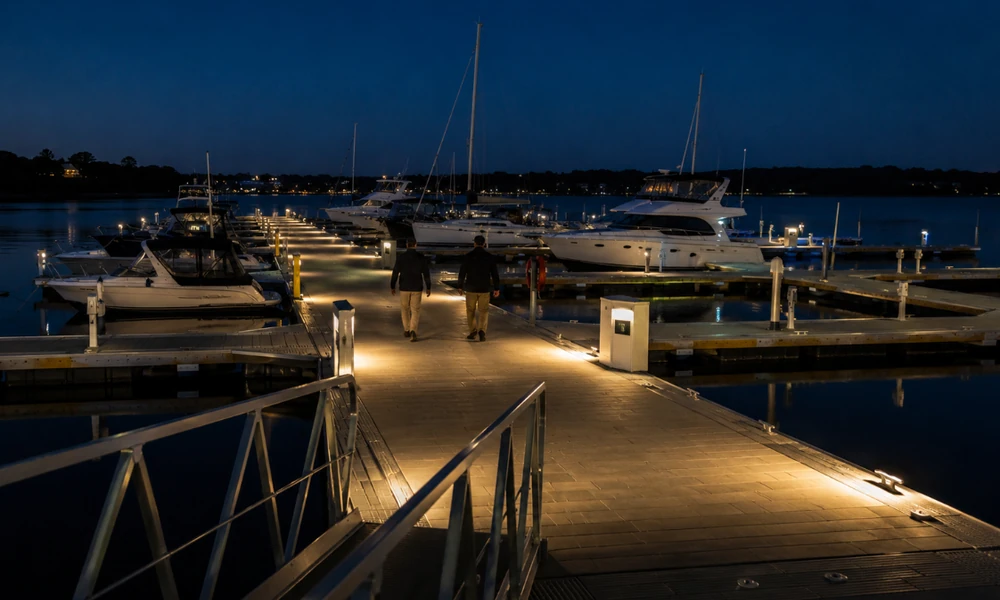
A marina does not stop working when the sun goes down. Boats may arrive late, staff may inspect equipment, and visitors may walk between slips after dark. Without proper lighting, even a familiar floating dock can become difficult to navigate.
Floating dock lighting helps people see walking surfaces, dock edges, cleats, ramps, and other possible hazards. A good lighting plan supports safer nighttime marina operations without creating harsh glare or wasting energy.
Why Does Floating Dock Lighting Matter?
Floating docks constantly move with waves, tides, and changing water levels. This movement may be minor, but it can still affect a person’s balance. At night, judging the distance between a boat and the dock can also be more difficult.
Proper lighting makes these areas easier to see. It can help marina users notice wet surfaces, ropes, utility connections, and changes in elevation. Lighting also gives staff better visibility when checking boats, responding to an issue, or helping someone enter a slip.
However, more light is not always better. Bright fixtures aimed directly at people can create glare and make surrounding areas appear darker. The goal is to provide steady and controlled lighting where it is actually needed.
Where Should Dock Lights Be Installed?
Lighting should guide people through the marina in a natural way. Important areas usually include:
- Gangways and shoreline connections
- Main dock walkways
- Finger piers and slip entrances
- Steps or changes in surface height
- Dock edges and corners
- Utility pedestals
- Emergency equipment stations
- Fueling and service areas
- Gates and access-control points
Low-level lights can define the edges of a floating dock without shining into a person’s eyes. Fixtures may be installed along rub rails, decking edges, posts, or utility pedestals.
Gangways need special attention because their slope changes as the water rises and falls. Lighting should make both ends of the gangway visible, including the point where it meets the floating dock.
Choosing Fixtures for a Marine Environment
A marina is a demanding place for electrical equipment. Fixtures may be exposed to rain, salt spray, humidity, sunlight, vibration, and occasional contact with water.
Dock lights should be designed for outdoor marine use. Corrosion-resistant housings and sealed connections can help protect the system. Fixtures also need enough strength to handle normal activity around carts, ropes, tools, and dock equipment.
LED lighting is commonly used because it consumes less electricity and generally requires less frequent replacement than older bulbs. Warm-white lighting often creates a comfortable walking environment while reducing the sharp appearance caused by very cool or blue light.
All electrical installation work should follow applicable codes and marina requirements. A qualified marine electrician should evaluate wiring, grounding, circuit protection, connections, and fixture locations.
Avoiding Glare and Excess Light
A poorly aimed light can make nighttime movement harder instead of easier. Light should be directed downward toward the dock surface. Shielded fixtures help prevent the light source from shining directly into the eyes of boat operators and pedestrians.
Marinas should also consider nearby homes, other boaters, and wildlife. Excess light spilling across the water can disturb the nighttime setting and create unwanted reflections. A softer and more focused design can improve visibility while keeping the marina comfortable.
Timers, photocells, and motion controls may reduce unnecessary energy use. Still, important routes and emergency areas should remain visible whenever people are expected to use them.
Inspecting and Maintaining Dock Lighting
Even a well-designed lighting system needs regular attention. Staff should inspect fixtures after storms, unusually high tides, or impacts involving boats and equipment.
A routine inspection may include checking for:
Cleaning the lenses may also improve performance. Salt, dirt, insects, and moisture can reduce the amount of light reaching the dock.
A Safer Marina After Dark
Effective floating dock lighting is about more than appearance. It supports movement, maintenance, security, and emergency response after sunset. The best system provides enough light to identify hazards without covering the marina in unnecessary brightness.
With thoughtful fixture placement, controlled light levels, marine-rated equipment, and routine inspections, floating docks can remain functional and easier to navigate throughout the night.
This post was written by a professional at Supreme Marine Floating Docks. Supreme Marine Floating Docks is dedicated to providing top-quality floating dock for sale Palm Beach and marine accessories that combine durability, innovation, and superior performance. While we are a new brand, our team brings over 50 years of combined industry experience, making us a trusted name in the marine world. We are passionate about designing and delivering products that meet the highest standards, ensuring reliability and longevity in all marine environments. Whether for residential, commercial, or recreational use, our docks are crafted with precision and care, setting a new benchmark in the industry. At Supreme Marine, we don’t just build docks-we create lasting solutions.